Why the ESP32 is the Undisputed King of Modern IoT Development
Monday, August 31, 2026
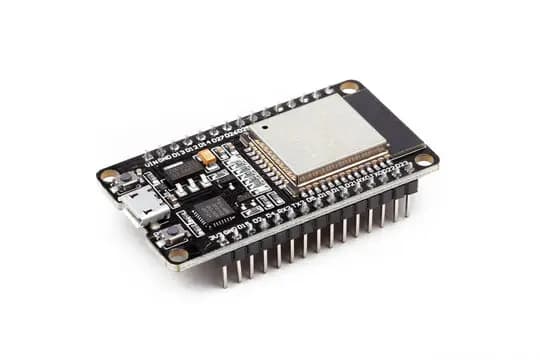
If you're diving into the world of embedded systems, robotics, or the Internet of Things (IoT), you've likely encountered the ESP32. Created by Espressif Systems, this low-cost, low-power system on a chip (SoC) has completely transformed how we approach hardware design.
As someone who spends entirely too much time routing custom PCBs, debugging firmware, and designing automated systems, I can tell you firsthand: the ESP32 isn't just a convenient prototyping tool. It's a production-ready powerhouse that scales from simple breadboard projects to highly complex, multi-sensor edge deployments.
Here is a look at why the ESP32 family has become the default choice for modern embedded engineering.
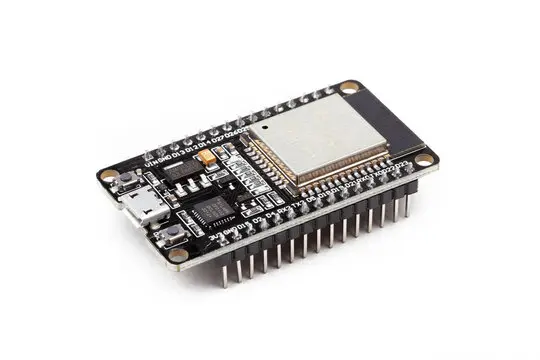
The Specs That Actually Matter
Before the ESP32, adding wireless connectivity to a microcontroller usually meant pairing a separate MCU with a bulky radio module and writing complex glue code to make them talk. The ESP32 collapsed that entire hardware requirement into a single, highly efficient chip.
- Processing Power: Most classic ESP32 chips run a dual-core Xtensa 32-bit LX6 microprocessor clocked at up to 240 MHz. This dual-core architecture is crucial: you can dedicate one core entirely to handling the Wi-Fi or Bluetooth stack while the second core runs your application logic without stalling sensor readings. (Newer variants, like the ESP32-C3, use highly efficient single-core RISC-V architectures for extreme low-power applications.)
- Integrated Wireless: It packs built-in Wi-Fi (802.11 b/g/n) and Bluetooth (both Classic and BLE) directly on the die.
- Massive I/O: The pinout exposes a dense set of peripherals—SPI, I2C, UART, I2S (for audio), PWM, ADC, and capacitive touch. You rarely have to rely on external interface chips just to talk to your sensors.
From Breadboard to Custom PCB
Prototyping on an ESP32 DevKit is great, but the chip truly shines when you move into custom printed circuit board (PCB) design.
When moving a project out of the lab and into the real world, relying on jumper wires isn't an option. Designing custom two-layer PCBs in tools like KiCad or EasyEDA allows you to fully harness the ESP32's capabilities. For example, when building an IoT dual-channel relay board, you can integrate 0805 SMD components, add optocoupler isolation to protect the MCU from high-voltage spikes, and include a CH340C auto-programming circuit. This turns a messy tangle of wires into a sleek, reliable, and easily flashable piece of hardware.
Real-World Edge Applications
The real magic of the ESP32 is its overhead. Because it has so much processing power and RAM (520 KB SRAM, plus support for external PSRAM), you can push complex logic right to the edge rather than relying on a cloud server to do the heavy lifting.
1. Complex Multi-Modal Systems
The ESP32 can act as the central brain for highly complex local networks. Consider a smart biometric access or attendance system: a single ESP32 can simultaneously handle RFID polling, read fingerprint scanner data, and process voice biometrics. It has enough memory overhead to handle local RAM caching and log data offline to an SD card if the network drops, before smoothly syncing that data to a web dashboard backend once the connection is restored.
2. TinyML and Edge AI
You don't need a massive GPU to run machine learning. By training lightweight neural network models and deploying them as C-array header files, the ESP32 can run real-time anomaly detection locally. Whether it's analyzing acoustic data for structural faults or processing gas sensor arrays for a handheld "electronic nose" to evaluate food freshness, the ESP32 has the mathematical muscle to execute these inferences on the device itself.
3. Environmental and Autonomous Monitoring
Variants like the ESP32-S3 and the camera-equipped ESP32-CAM open up entirely new avenues for remote monitoring. From smart aquaculture setups that autonomously manage water circulation pumps and multi-segment tank sensors, to remote flood monitoring nodes that can sleep for weeks on battery power and wake up to transmit critical data, the chip is incredibly adaptable.
The Ecosystem Advantage
Hardware is only as good as the software that supports it, and this is where Espressif has secured its dominance.
While beginners can get up and running in minutes using the Arduino IDE, professional developers can leverage the official ESP-IDF (Espressif IoT Development Framework) or PlatformIO in VS Code for total control over the FreeRTOS environment. Whether you are writing a simple web dashboard portal in C/C++ or deploying Python backends to interface with your nodes, the open-source libraries and community support are unmatched.
The ESP32 isn't just a microcontroller; it's a complete toolkit that bridges the gap between hardware and software engineering. If you haven't yet designed a board around one, it's time to fire up your CAD software and see what it can do.